
Many labor migrants in Russia encounter the term “biometrics,” but do not always understand what it means or why it is required. Let’s explain it in a clear and simple way.
Biometrics is the collection of a person’s physical data that allows their identity to be accurately verified. In Russia, basic biometrics are used for foreign citizens:
- Facial photography;
- Fingerprint collection.
These data do not contain information about income, place of work, or personal life. They are used solely for identification purposes.
Biometric data of foreign citizens are not collected “just because.” They are used in a number of everyday and legally significant situations:
- Identity verification when applying for and checking migration documents;
- Monitoring the legality of stay and preventing the use of forged documents;
- Interaction with government services (through the Ministry of Internal Affairs and other authorities);
- Issuance of SIM cards and mobile services — in Russia, operators are required to verify a subscriber’s identity, and in some cases the data are checked against government databases;
- Financial and administrative procedures where accurate identity verification is required.
Biometrics helps prevent situations where one person uses someone else’s documents or obtains multiple patents under different names.
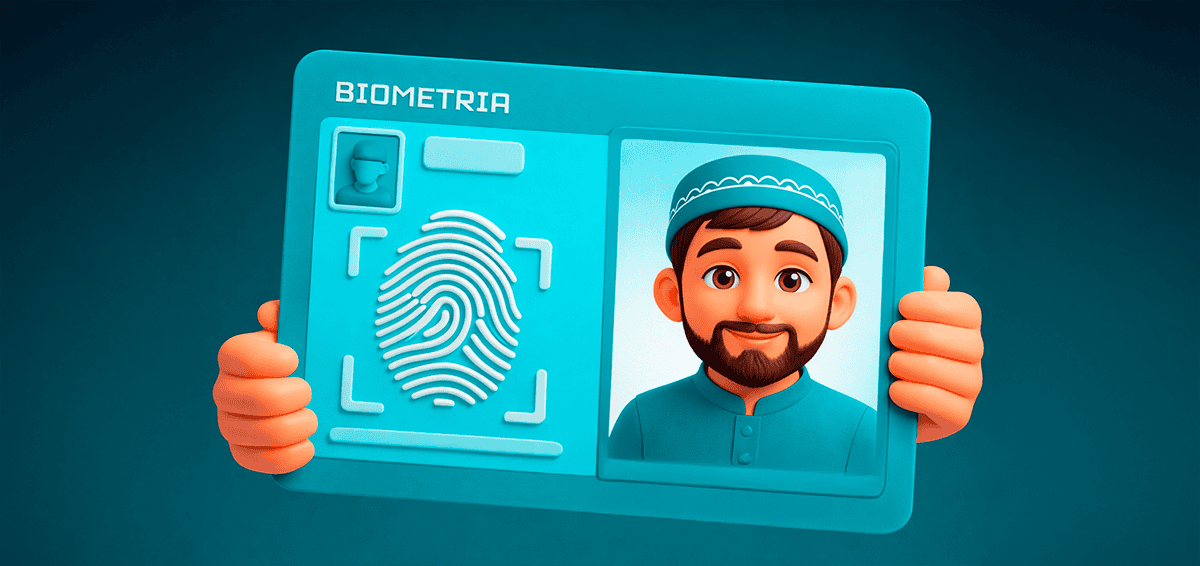
Biometrics is mandatory for foreign citizens who:
- Come to Russia for work;
- Plan to stay in the country for more than 90 days;
- Apply for a patent, work permit, or other migration documents.
The procedure is completed once. Fingerprints do not need to be submitted again if the data are already in the database.
Where and how the procedure is carried out:
- In Moscow and the Moscow Region, biometrics are collected at the Multifunctional Migration Center (MMC) “Sakharovo”;
- In other regions — at divisions of the Ministry of Internal Affairs or authorized migration centers;
- Until June 30, 2026, fingerprints and photos will be taken at any border crossing point in Russia equipped with the necessary equipment.
The procedure is free of charge, takes little time, and includes photography.
Important to know: Refusal to undergo biometric collection or missing the established deadlines may lead to a reduced period of stay in Russia and problems with migration documents.