
In summer 2026, new measures are being discussed and introduced that may affect the lives of foreign citizens in Russia. Some of them have already been approved, while others are still under consideration.
1. More grounds for deportation
A draft law is being considered in the State Duma that could expand the list of reasons for deportation from Russia.
Currently, there are about 22 such grounds, but the number may increase to 43.
The list may include:
- violation of public order;
- disobedience to the police;
- obstructing traffic or pedestrians;
- online publications that may be considered offensive;
- actions related to discrediting the Russian army.
Fines for certain violations are also expected to increase.
This means stricter control, and even minor violations may lead to serious consequences.
2. New rules for citizens of Tajikistan
Changes are planned for labor migrants from Tajikistan. Before entering Russia, they may be required to undergo:
a medical examination;
- fingerprinting and photographing;
- background checks for criminal records or wanted status;
- training in the Russian language and a profession.
These measures aim to ensure that workers arriving in Russia are already prepared and verified.
3. Changes for families of foreign military personnel
Foreign citizens serving under contract may receive benefits, such as simplified access to citizenship.
However, restrictions are being introduced for their families:
- they may be denied a residence permit (VNZh);
- or an already issued residence permit may be canceled if violations are found (for example, related to extremism).
This means that not only the individual but also their family members will be subject to checks.
The key change — stricter control
It is now especially important to:
- follow the law, even in minor matters;
- keep track of documents and deadlines;
- not ignore police requirements;
- be careful about what you post online.
The more rules there are, the higher the risk of making mistakes.
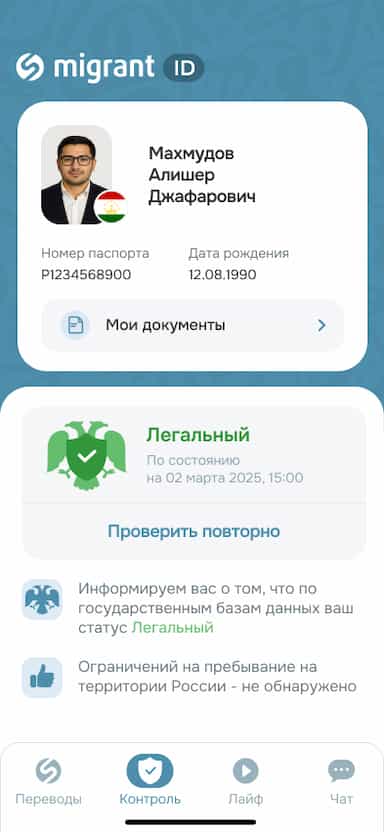
To avoid violations and detect them in time, it is important to monitor your status. This can be done through the Migrant ID service, which helps you check your status in the RKL database.