
When applying for Russian citizenship, it is important not only to collect the required documents and complete all the necessary procedures. The applicant must also be able to independently read the text of the Oath of Citizenship of the Russian Federation in Russian.
The Eighth Cassation Court of General Jurisdiction highlighted this requirement while considering the case of a foreign citizen who was unable to take the oath several times due to insufficient knowledge of Russian.
Why Is This Important?
Even after a decision to grant Russian citizenship has been made, it does not automatically take effect.
To complete the procedure, the applicant must take the Oath of Citizenship of the Russian Federation. The applicant has one year to do so.
If the oath is not taken within this period, the decision to grant citizenship is considered invalid.
Simply repeating the words after another person is not enough. The applicant must be able to read the text independently and understand its meaning.
Why Did the Court Highlight This Requirement?
In practice, there have already been cases where a decision to grant citizenship was made, but the applicant was unable to complete the procedure due to insufficient knowledge of Russian.
In the case considered by the Eighth Cassation Court, a woman attempted to take the oath several times but was unable to read the text independently in Russian.
She later learned Russian and was able to read the oath in court. However, the court pointed out that what mattered was whether the applicant could read Russian at the time when she was required to take the oath.
Therefore, you should not assume that you can improve your Russian after the established deadline has already expired. It is better to prepare for this stage in advance.
What Should You Do in Advance?
If you are planning to obtain Russian citizenship, it is best not to postpone learning Russian until the final stage of the process.
Before the oath ceremony, you should be able to read Russian, understand the basic wording used in official documents, and confidently read and understand the text of the oath.
These skills will be useful not only when obtaining citizenship but also in everyday life — when communicating with government authorities, employers, and doctors, as well as when completing official documents.
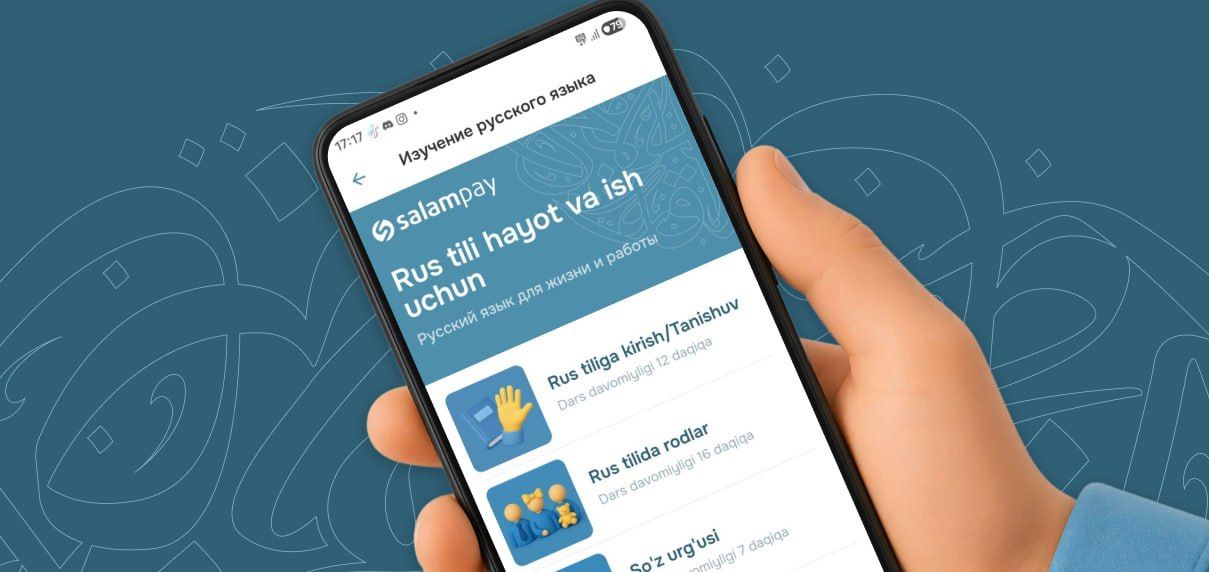
If you find it difficult to learn Russian on your own, the SalamPay app offers a free Russian language course. It includes 15 video lessons in Uzbek, as well as short quizzes to help you review and reinforce what you have learned.
Prepare for important procedures in advance to avoid unnecessary problems.